Introduction
A “unicorn” is a privately held startup valued at over $1 billion. The term once described something rare and almost mythical. Today, especially in retail and consumer businesses, unicorns are becoming more common but what’s truly interesting is how they are built.
These companies are not just improving old systems, they are completely rethinking how we shop, eat, dress, and interact with brands. From ethnic e-grocery platforms to live-stream shopping marketplaces, they prove that retail today is no longer just about selling products. It’s about building experiences, communities, and ecosystems.
Companies like Fanatics, Gopuff, Faire, Back Market, Meesho, Wonder, Vuori, Whatnot, Skims, and Weee! have all grown into multi-billion-dollar businesses by doing things differently. Their journeys aren’t just about raising capital, they are about smart strategy, deep customer understanding, and strong execution.
So, what do they have in common?
When you break it down, their success comes from a few powerful principles – clear focus, bold thinking, and the ability to execute consistently.
Below are the 10 biggest lessons from their journeys.
Top 10 Lessons from Leading Retail Industry Unicorns
1. Own More of the Value Chain – (Gopuff & Fanatics)
Most companies act as marketplaces, connecting buyers and sellers. But the most profitable ones often go a step further, they control more of the process.
Gopuff chose to own its inventory and delivery operations from the beginning. This required more investment, but it gave them full control over pricing, margins, and customer experience.
Fanatics followed a similar approach by managing everything from product creation to delivery.
Lesson: Don’t just think about selling a product. Ask yourself how much of the entire process can you own? The more control you have, the stronger your business becomes.
2. Execution Matters More Than Ideas – (Fanatics & Weee!)
A great idea means nothing without strong execution.
Fanatics’ Michael Rubin is known for his intense work ethic and focus on winning. His belief is simple: success comes from outworking the competition and doing the basics extremely well.
Weee! shows the same mindset. Online grocery may sound simple, but managing supply chains, logistics, tech, and operations at scale is incredibly complex.
Lesson: Your real advantage isn’t your idea, it’s how well you execute it. The harder your business is to run, the harder it is to copy.
3. Start Small: Focus on an Underserved Niche – (Weee! & Skims)
You don’t need to serve everyone from day one. You just need to serve someone really well.
Weee! focused on Asian and Hispanic communities by offering culturally relevant groceries that were hard to find elsewhere.
Skims focused on inclusive shapewear, offering a wide range of sizes and skin tones that the market had ignored.
Lesson: Start with a niche that feels overlooked. Build something they truly love, and expansion will follow.
4. Turn Shopping into an Experience – (Whatnot)
Shopping is no longer confined to a mere transactional exchange; it is increasingly evolving into an immersive and engaging experience
Whatnot built a live-stream shopping platform where users can buy collectibles in real-time auctions. The excitement, interaction, and community make it more than just buying; it becomes an event.
Lesson: If your product is fun and engaging, customers will keep coming back not just to buy, but to experience.
5. Help Others Win – (Faire)
Some of the most successful companies grow by empowering others.
Faire helps independent retailers compete with big chains by giving them access to unique products, better payment terms, and easier sourcing.
Lesson: Find a group that is strong but underserved, and build tools that help them succeed. When they grow, you grow
6. Democratize Entrepreneurship for the Masses – (Meesho)
Meesho has enabled 15+ million women resellers and millions of micro-entrepreneurs across India’s Tier II and III cities to start businesses with zero investment. By using WhatsApp and Instagram for social commerce, it removed traditional barriers to entry.
Lesson: Build platforms that let others earn. When you enable mass participation, you create a scalable and inclusive growth engine.
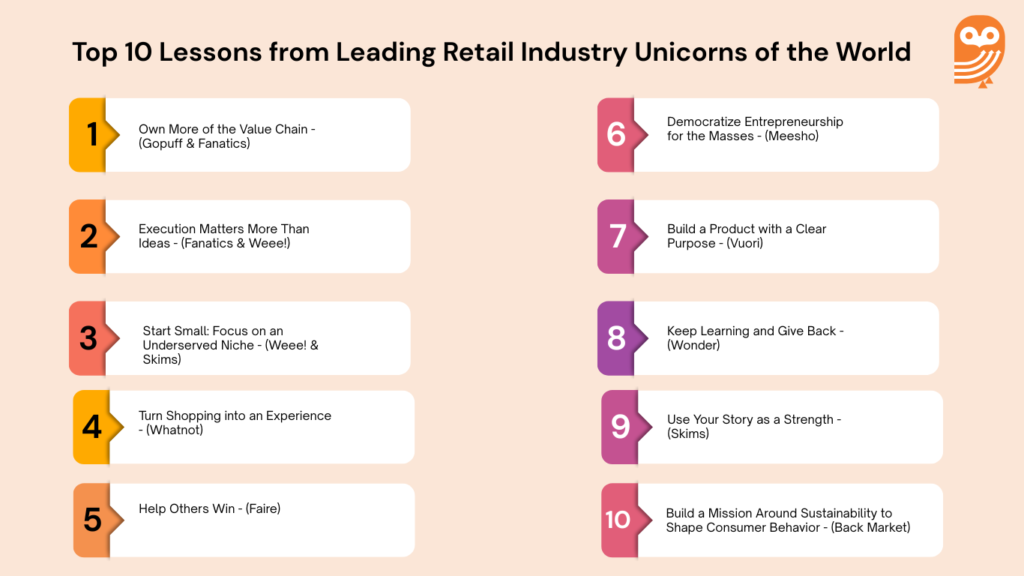
7. Build a Product with a Clear Purpose – (Vuori)
In crowded markets, clarity wins.
Vuori entered the competitive athleisure space but focused on versatile clothing that fits into everyday life not just workouts. They also targeted men first, an underserved segment.
Lesson: Don’t chase trends. Build something with a clear purpose that solves a real need and can sustain itself financially.
8. Keep Learning and Give Back – (Wonder)
Great founders never stop learning.
Marc Lore, behind Wonder, believes in constantly learning and helping others without expecting anything in return. Over time, this builds strong networks and deeper knowledge.
Lesson: Your biggest asset is what you learn and who you build relationships with. Long-term success comes from both.
9. Use Your Story as a Strength – (Skims)
A founder’s story can be a powerful advantage.
Skims is deeply connected to Kim Kardashian’s personal experience. That authenticity makes the brand more relatable and trustworthy.
Lesson: People connect with stories, not just products. If your journey aligns with your product, it becomes your strongest marketing tool.
10. Build a Mission Around Sustainability to Shape Consumer Behavior – (Back Market)
Back Market, a $5.7B refurbished electronics marketplace, is making circular tech mainstream by offering devices at 30-70% lower prices while reducing e-waste. It achieved profitability in Europe in 2024, proving sustainability can drive strong business outcomes.
Lesson: Align your business with a global need like sustainability. The companies that win will shape how people consume, not just what they buy.
Conclusion
These retail unicorns didn’t just grow fast; they changed the way industries work.
What connects them all is a strong focus on customers, clear differentiation, and consistent execution. They didn’t rely on discounts or short-term tactics. Instead, they built ecosystems where customers feel understood, engaged, and valued.
They show us that success comes from:
- Owning key parts of the business
- Serving a specific audience really well
- Building strong communities
- Solving meaningful problems
- Staying true to a clear purpose
For anyone building in retail or consumer tech, the message is simple: Be bold, stay focused, and build something that genuinely improves people’s lives.
That’s how unicorns are created and how the next wave of innovation will happen.
Dive into more Unicorn insights at orangeowl.marketing/unicorn-chronicles
Frequently Asked Questions (FAQs)