
Discord Success Story Introduction
The journey of Discord is one of the most compelling modern case studies in product evolution and community-led growth. What began as a tool for gamers to chat while playing quickly transformed into a powerful platform for a broad range of communities—from study groups and artists to remote-work teams. This success story is a powerful lesson in adaptability for all aspiring entrepreneurs.
Co-founded by Jason Citron and Stanislav Vishnevskiy, Discord’s relentless focus on creating low-latency, high-quality voice, video, and text communication carved out a unique space in a crowded market. With a current valuation estimated around $15 billion (as of a 2021 funding round), Discord achieved unicorn status and has positioned itself as the definitive digital space for conversation and community. The purpose of covering this growth story is to provide clear, actionable takeaways and inspiration for the next generation of startups.
Origin Story
The roots of Discord lie in the struggles and subsequent pivots of its founders’ previous ventures. Jason Citron, a seasoned entrepreneur who previously founded the social gaming platform OpenFeint, recognized a critical gap in the market. While working on a multiplayer iPad game, he and Vishnevskiy grew frustrated with the existing voice communication tools for gamers—they were clunky, resource-heavy, and difficult to set up. They saw an opportunity to build a solution that offered simple, seamless communication without sacrificing game performance.
Jason Citron and Stanislav Vishnevskiy were deeply embedded in the gaming world. Citron’s past success with OpenFeint, which sold for $104 million, gave him experience in scaling social startups. Vishnevskiy brought crucial engineering expertise. Their initial vision was to create a superior, low-friction voice chat service tailored specifically for the needs of competitive PC gamers. The founders intuitively understood that for this community, the chat experience was as important as the game itself.
In fact, Citron has often spoken about how his early passion prepared him for his current role, noting that:
This highlights a key lesson for entrepreneurs: passion and prior experience, even in seemingly unrelated fields like gaming, can provide invaluable strategic and collaborative takeaways for building a successful tech company.
Business Space and Early Challenges
Discord entered the communication space in 2015, a period already dominated by established players like Skype, TeamSpeak, and various in-game chat clients. These incumbents, however, catered to either professional or highly specific user bases. Discord’s unique value proposition was simple: a free, always-on, high-quality voice service with an elegant user interface, specifically targeting the global community of gamers. This focus allowed the platform to thrive by serving a passionate niche, which is a common lesson for successful startups.
The earliest challenge was gaining critical mass and proving the platform’s stability. Discord’s first breakthrough came through word-of-mouth adoption, particularly with niche communities within games like League of Legends and World of Warcraft. They tackled industry challenges by focusing on a reliable, secure service that required minimal system resources, a significant advantage over competitors.
However, the most important development was the recognition that the platform’s value extended far beyond gaming. The early struggles included managing explosive, unexpected growth and shifting the company’s internal focus. This transition from a “voice chat for gamers” to “a place to talk” marked the crucial moment where Discord’s market potential truly exploded, creating a profound lesson for entrepreneurs on the power of product-market fit that transcends the initial target demographic.
Growth Strategies
Discord’s primary growth strategy was community-led and viral. By providing an exceptional, free-to-use product, the platform empowered its users to become its best marketers. The server invite system, which makes it easy to set up and share a private community, was inherently viral. As user-generated communities grew, so did the platform. They focused on building tools for server management (roles, permissions, channels), making it indispensable for community leaders. For aspiring startups, this is a crucial lesson in prioritizing user experience to drive organic growth.
Unique Strategic Moves: The “Wider World” Shift
A key strategic move was the conscious effort, starting around 2020, to rebrand and position itself as a communication tool for everyone. The motto shifted from “Chat for Gamers” to “Your Place to Talk.” This move dramatically expanded their total addressable market, turning it from a niche gaming app into a mainstream social utility. This included:
Template Servers: Offering pre-configured servers for non-gaming uses (like classrooms or art communities).
Increased Stability: Investing heavily in server infrastructure to support a broader, non-gaming audience during the pandemic.
Community Programs: Investing in programs to help community leaders manage and monetize their servers.
These bold moves resulted in immense scaling, providing a strong case study in strategic market expansion for growth-oriented startups.
Marketing Strategies
Discord’s marketing approach was heavily weighted toward the innovative and authentic. They spent relatively little on traditional advertising in their early days, choosing instead to focus entirely on product-led growth. Their early “marketing” consisted of working directly with gaming influencers, streamers, and eSports teams, integrating the product naturally into the gamer ecosystem. This authenticity resonated with their core audience, making adoption feel organic rather than forced.
The platform’s branding is friendly, playful, and user-centric. Discord leveraged its mascot, Clyde, and its distinctive user experience to create a strong, recognizable identity. Their content strategy often focused on celebrating user success stories and highlighting unique, quirky communities on the platform. This focus on user-derived content created a strong sense of ownership and loyalty among their users. This is a vital takeaway for modern entrepreneurs: building a strong, lovable brand is often more valuable than high ad spend.
Scaling to Unicorn Status
Discord achieved unicorn status by 2020 and its valuation continued to soar, reflecting its massive cultural impact and its successful pivot to a mainstream product. This rapid scaling was not without its internal challenges, as captured by a significant lesson from Citron himself:
This quote serves as a powerful case study for all startups experiencing hyper-growth: delegation without maintaining a clear, hands-on, founder-led vision can be detrimental to company culture and execution. True scaling requires maintaining core alignment, not just “empowering” others to take over.
The “Secret Sauce”
Discord’s secret sauce lies in its server model and its commitment to user privacy. By allowing users to create their own customizable, private ‘homes’—servers—it offered an antidote to the chaotic, public feeds of traditional social media. It provided “intent-based networking,” where users join spaces to discuss specific, shared interests, rather than simply connecting with pre-existing friend groups. This architectural design creates a focused, high-engagement environment that drives its continued success story.
5 Key Lessons for Other Entrepreneurs
Discord’s journey offers invaluable takeaways and practical lessons for aspiring entrepreneurs looking to build lasting startups:
1. Obsessively Solve a Niche Pain Point First
Discord did not set out to build the next Facebook; they aimed to build the best voice chat for gamers. This intense, initial focus on an underserved, highly engaged niche allowed them to build a superior product and a loyal community. The lesson here is to secure product-market fit in a narrow vertical before attempting to broaden the horizon. This foundation provided the stability needed for future scaling.
2. Treat Your Product as a Platform, Not a Feature
The founders realized early that the communication system could be a platform for communities, not just a feature for a game. The server structure—with its custom roles, channels, bots, and permission sets—transformed Discord from a simple chat app into a flexible operating system for online groups. This strategic shift is a crucial lesson for startups; don’t just solve a problem, create a framework that allows users to solve a multitude of problems themselves.
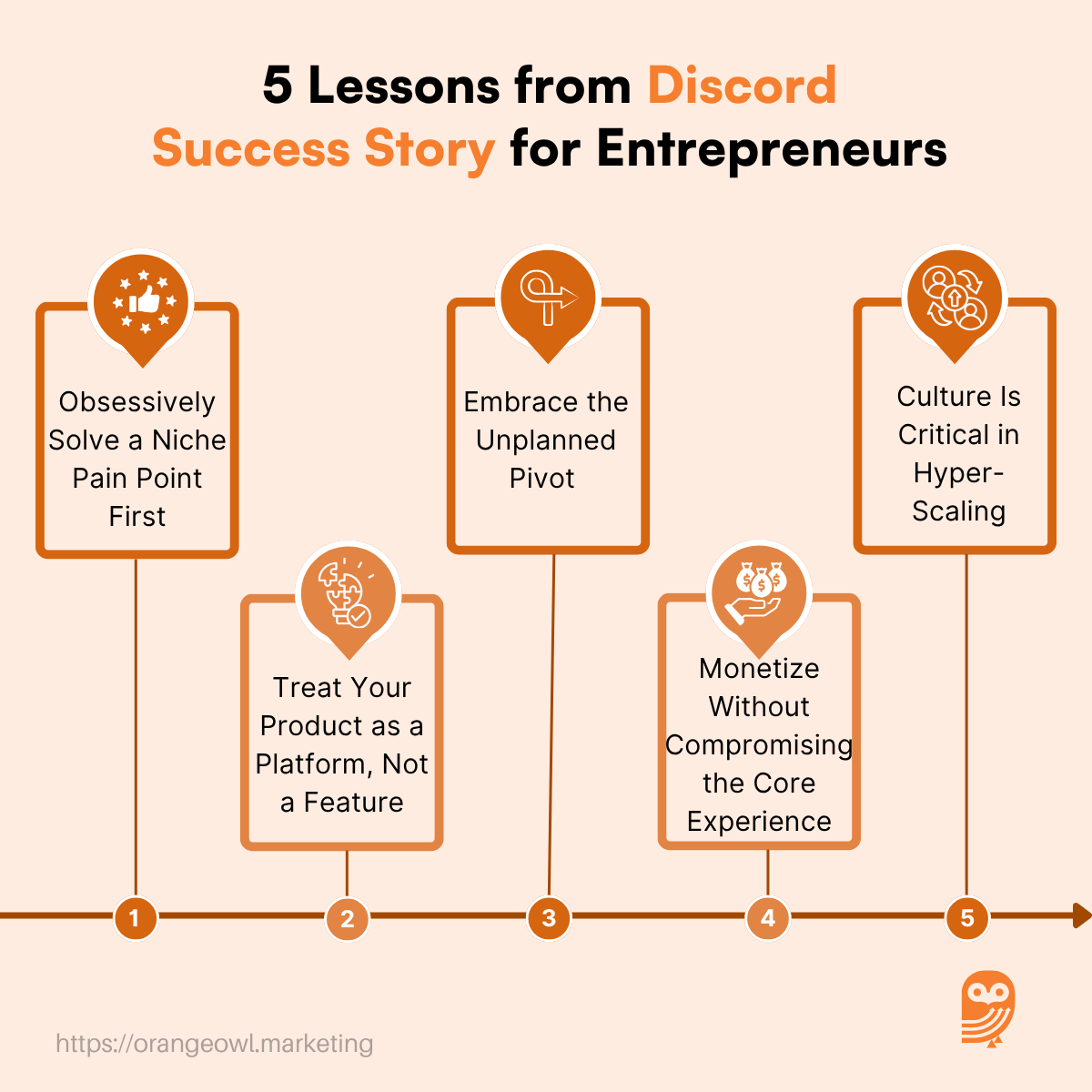
3. Embrace the Unplanned Pivot (The “Wider World” Shift)
Discord’s pivot away from solely focusing on the gaming market was a bold but necessary move for global growth. The pandemic merely accelerated a long-term strategy to appeal to the “wider world” of communities, study groups, and remote workers. The takeaway is that founders must be pragmatic about where their product finds its most valuable use, even if it differs from the initial vision. Being a unicorn requires courage to abandon comfort zones.
4. Monetize Without Compromising the Core Experience
Discord’s main revenue comes from Nitro, a premium subscription that offers cosmetic and quality-of-life improvements (better emojis, higher upload limits) rather than essential features. This model is a key lesson in ethical growth for startups. They prioritized keeping the core product free and accessible to ensure the community continues to grow, generating success stories and value, while selling premium enhancements to super-users.
5. Culture Is Critical in Hyper-Scaling
As documented in the founder’s quote, rapid scaling from 200 to 1,000 employees led to significant “management mistakes” due to poor alignment and overly aggressive delegation. The case study highlights the importance of maintaining an authentic, founder-led vision during periods of explosive growth. For entrepreneurs, the vital lesson is to build a strong company culture that can withstand rapid expansion and to always ensure your executive team is aligned on the core mission and values, beyond just saying they are.
Discord Success Story Conclusion
Discord’s evolution from a niche gaming tool into a global communication powerhouse is a powerful success story and a masterclass for entrepreneurs navigating the challenges of product evolution and hyper-growth. The primary takeaways—from ruthless product focus to a strategic pivot—demonstrate the kind of agile, user-centric thinking required to build generational startups.
In conclusion, the lesson from Discord is clear: build a great product for a loyal few, and they will help you build a global platform for the many. The company’s focus on community, quality, and user-centric design has cemented its place as a modern unicorn.
Looking toward the future, the company continues to focus on enhancing the user experience, though its founder has expressed broader views on technological advancement, stating:
This forward-thinking perspective, even on topics outside the immediate business, underscores the kind of long-term vision and commitment to technology that characterizes successful entrepreneurs.
Also Read : Dailyhunt Success Story: 5 Key Lessons For Every Entrepreneur