featured-stories
Presidency High School: How Growing As An Institution Is Possible Without Losing What Matters
Anuska B
October 8, 2026
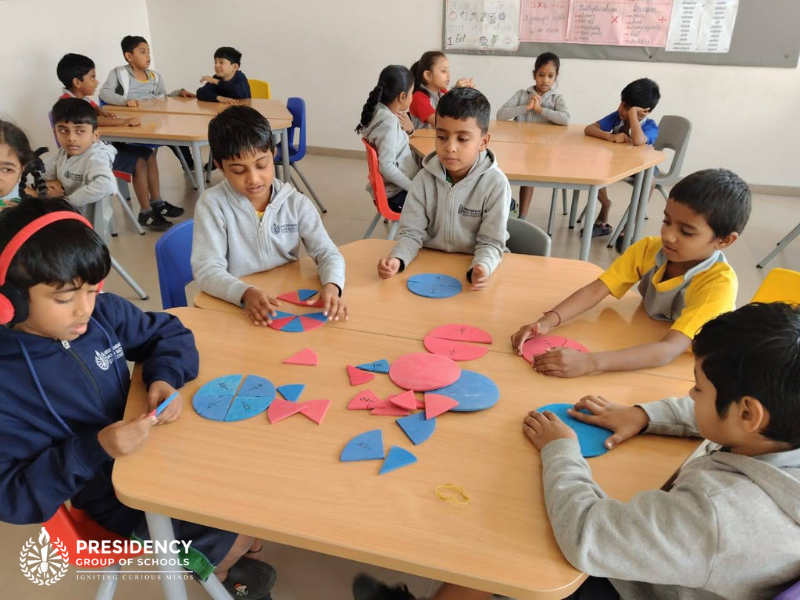
Table of Contents
In 1995, Presidency School began with 11 children and a simple belief: children learn best when they feel known, cared for and encouraged to discover what they are capable of.
More than three decades later, that belief remains at the heart of Presidency High School. What began as a small preschool in Nizamabad has grown into an institution built around academic rigor, personal attention, curiosity and character. Yet its evolution has never been about growth for its own sake. The school has continued to ask a more important question: what does a child need to thrive, both inside and beyond the classroom?
For Presidency, the answer goes beyond marks. It lies in helping children learn how to learn, understand themselves, develop confidence, and become thoughtful, capable individuals.
Today, the school is entering its next chapter with the same willingness to learn and evolve that shaped its beginnings, while finding new ways to communicate its philosophy to the families it serves.
Origin Story
Presidency School was founded in 1995 by Mrs. Shamantha Nalla. At the time, there was no grand plan to build a group of schools. There was simply an intention to create a place where children felt cared for, encouraged and confident.
The school began as a small preschool with just 11 children. From those early days, personal attention became central to the Presidency philosophy. Mrs. Nalla believed that every child should be known as an individual, cared for deeply and given the confidence to discover their own potential.
That philosophy extended to the adults responsible for creating the learning environment. One of the biggest challenges in the early years was finding teachers who shared her passion for working with children. Rather than treating this as simply a recruitment problem, Mrs. Nalla invested time in mentoring her teachers, encouraging them and helping them develop confidence and purpose in their work.
Her approach recognised something that remains relevant today: children benefit when the adults around them are themselves inspired, supported and committed to learning.
The early years also involved the less visible challenges of building an institution from the ground up. Administrative responsibilities, operational decisions and the countless demands of running a growing school often meant wearing several hats at once.
But the underlying philosophy stayed consistent. Presidency grew by building relationships, strengthening its teachers and creating an environment where children could develop not only academically, but personally.
The Problem
As education evolves, schools face a challenge that goes beyond keeping up with changing curricula. They have to prepare children for a world that may look very different by the time those children enter adulthood.
Presidency recognised that academic achievement, while essential, could not be the entire measure of education. Children also need curiosity to ask better questions, confidence to navigate uncertainty, creativity to approach problems differently and compassion to understand the people around them.
The gap was not necessarily between traditional education and something completely new. It was between an education focused primarily on what children should know and one that also considered how they learn, how they think and who they become.
At the same time, Presidency itself was changing. As the school expanded and its campuses, programmes and infrastructure developed, its communication needed to evolve with it.
Its social presence lacked the consistency and depth needed to tell the school’s story effectively. The richness of everyday student life, the school’s philosophy and its commitment to holistic development were not always visible to prospective parents encountering Presidency from the outside.
The challenge, therefore, was twofold: continue strengthening the educational experience while finding a clearer, more contemporary way to communicate what made that experience distinctive.
The Solution
Presidency’s answer has been to build an educational environment that combines strong academic standards with the development of confidence, character and independent thinking.
The school’s approach is rooted in helping students learn how to learn. Children are encouraged to ask questions rather than simply receive answers, understand themselves better and develop the confidence to participate, experiment and grow.
This philosophy comes through in several aspects of the Presidency experience.
Innovative teaching creates space for students to engage with learning rather than simply consume information. Inquisitive students are encouraged to question, explore and develop their own perspectives. Parent-teacher connection recognises that education works best when families and educators remain connected. And everyday student life extends learning beyond textbooks into sports, leadership, creativity, relationships and life skills.
The school also places strong emphasis on academic rigour. Holistic education, in the Presidency model, does not mean compromising academic standards. Instead, it means giving students a broader foundation from which they can pursue academic excellence while developing the capabilities they will need beyond school.
Signature events, evolving infrastructure and a vibrant school environment further contribute to an experience designed around the whole child.
This balance is central to the Presidency difference: maintaining the discipline and rigour of a strong academic institution while recognising that education should also help children become curious, confident and compassionate people.
Growth through Marketing Efforts
As Presidency grew, its external communication needed to catch up with the depth of the institution itself. This is where the partnership with Orange Owl became part of the school’s next phase of growth.
The focus was not simply on increasing the number of posts or making the school look more active online. It was about creating a more cohesive communication system that could consistently express the Presidency philosophy across different touchpoints.
Over 12 months, Presidency’s social media presence became more structured, supported by a clear content calendar and design system. This helped bring greater consistency to how the school communicated its academics, student life, values and achievements. Across two social handles, followers grew by 50% and 80%, while monthly engagement increased by more than 150%.
The work also extended beyond social media.
In 2025, Presidency ran an admissions campaign designed to communicate the school’s new campus and growing infrastructure to current and prospective families. Strategically placed banners across the city and thoughtfully designed leaflets helped extend that communication beyond digital channels and strengthen awareness of the school’s continued development.
The school also built a new website from scratch. Designed to feel fresher and more aligned with the evolving Presidency brand, the website brought together the school’s philosophy, progress, achievements and educational approach in a clearer experience for families exploring the institution.
Communication within the school community evolved as well. An internal survey found that more than 90% of parents across the pre-primary, primary and high school segments found the school’s updated internal communication valuable.
Perhaps most importantly, the work was not designed to create permanent dependence on an external agency. The internal creative team gained greater clarity and confidence in applying brand-aligned design practices, maintaining a consistent content pipeline and improving the way the school tells its story.
For Presidency, marketing became less about simply promoting the school and more about making the school’s existing identity easier to understand, recognise and engage with.
The Impact
The most meaningful measure of a school is ultimately what it enables children to become.
Presidency’s impact lies in an educational philosophy that has remained remarkably consistent even as the institution itself has changed. From the original 11 children in 1995 to the broader learning community it serves today, the underlying emphasis on knowing children as individuals continues to shape the school.
That philosophy also extends beyond students.
Teachers are encouraged to keep learning and developing alongside their students. Parents are treated as an important part of the educational community rather than passive recipients of information. And the school continues to recognise that education is strongest when children, teachers and families are learning with and from one another.
Its impact is therefore not limited to examination results or individual achievements. It is also visible in the habits students develop: asking questions, taking responsibility, working with others, approaching challenges with confidence and understanding that learning does not end when a lesson does.
For a school that began with the simple goal of making children feel cared for, that continuity matters.
Looking Ahead
The next chapter of Presidency is not built around a fixed idea of what a school should look like. In fact, its leadership sees the willingness to change as an essential part of remaining true to its founding values.
Over the next 10 to 20 years, the vision is for Presidency to remain deeply rooted in values while continuing to evolve with the world around it.
That means staying open to new research, questioning established assumptions and adopting new approaches when they genuinely benefit children. It means having the humility to keep learning and the courage to reconsider practices that may once have seemed unquestionable.
The goal is not to change simply because education is changing. It is to distinguish between change that is meaningful and change that is merely fashionable.
At the centre of that future is a community where children remain curious, confident and compassionate; where teachers care deeply and never stop learning; and where parents embrace learning alongside their children.
Presidency’s story began with 11 children and one fundamental belief: every child deserves to be known, supported and encouraged to discover their potential.
More than 30 years later, that belief continues to provide the foundation. The difference is that the questions Presidency is asking have grown alongside the children it serves.
And perhaps that is what allows a school to grow without losing its way: the willingness to keep learning itself.
Related Posts